 Image search results - "early" Image search results - "early" |
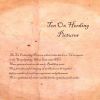
0.jpg0. The Ten Oxherding Pictures 2294 viewsThe Ten Oxherding Pictures which relate back to a Ch'an master in the Sung dynasty China (1126-1279 AD), have spiritual roots in the early Buddhist texts. They provide useful imagery of an illusion to be negated before a seeker of truth can experience enlightenment. The ox symbolise the mind and the herder symbolises the seeker.
|
|

07_Clearly-knowing-daily-activities.mp3(7) Clearly Knowing Daily Activities2742 viewsClearly Knowing Daily Activities requires one to have full knowledge of what one is doing as one is doing it - i.e. having present moment awareness.
|
|
08_Abhidhamma.mp3Usage of "Bodhisattava" and Absence of "Parami" in Early Pali Scriptures1164 viewsEnquiring into the origins, purpose and limitations of the Abhidhamma.
|
|

73_knowledges.pdfSeventy-Three Kinds of Knowledge3666 viewsVen. Nyanadassana, Bhikkhu
Since these knowledges are, as a Summary, very briefly stated,the present translation has explanatory notes in order to facilitate the reader understand them, at least intellectually, more easily. These explanations are based on the Pañisambhid -magga, the Visuddhi-magga and their corresponding Commentaries, and their references are clearly distinguished. The translation of each knowledge
is repeated in the Notes, in bold, for convenient reading.
|
|
acariya-mun-bio.pdfAcariya Mun Bhuridatta - A Spiritual Biography (with Photographs)2015 viewsA Spiritual Biography by Acariya Maha Boowa Nanasampanno. Translated from the Thai by Bhikkhu Dick Salaratano. Acariya Mun Bharidatta Thera was a vipassana meditation master of the highest caliber of this present age. He taught the profound nature of Dhamma with such authority and persuasion that he left no doubts among his students about the exalted level of his spiritual attainment. His devoted followers consist of numerous monks and laity from virtually every region of Thailand. His story is truly a magnificent one throughout: from his early years in lay life through his long endeavor as a Buddhist monk to the day he finally passed away.
This copy is a high quality screen version of the original eBook
|
|
acariya-mun.pdfAcariya Mun Bhuridatta - A Spiritual Biography (Screen Version)1854 viewsA Spiritual Biography by Acariya Maha Boowa Nanasampanno. Translated from the Thai by Bhikkhu Dick Salaratano. Acariya Mun Bharidatta Thera was a vipassana meditation master of the highest caliber of this present age. He taught the profound nature of Dhamma with such authority and persuasion that he left no doubts among his students about the exalted level of his spiritual attainment. His devoted followers consist of numerous monks and laity from virtually every region of Thailand. His story is truly a magnificent one throughout: from his early years in lay life through his long endeavor as a Buddhist monk to the day he finally passed away.
|
|
a_taste_of_salt(2).pdfA Taste of Salt4230 viewsThe Sutta Pitaka was written down in the Pali language over 2,000 years ago. The Sutta Pitaka is made of five collections of suttas; the Digha Nikaya, the Majjima Nikaya, the Samyutta Nikaya, the Anguttara Nikaya, and the Khuddaka Nikaya. These texts remain the most complete record of early Buddhist teachings. The suttas fill thousands of pages, and it is a daunting task for most readers to read through the many volumes. A Taste of Salt draws 350 pages containing the central teachings of the Buddha from the roughly 5,000 pages of the Sutta Pitaka. The purpose of this collection is to make these essential texts more accessible to meditators and students of Buddhism.
|
|
brahmavihara.pdfBrahmavihara Dhamma5187 viewsVen. Mahasi Sayadaw
This Brahmavihara Dhamma (Divine Abidings) expounded by the late Venerable Mahasi Sayadaw, reveals the systematic method of developing Metta, loving-kindness towards all beings and the way to lead a life of holiness. The style of presentation and the informative materials contained therein stand witness to the depth and wealth of spiritual and scriptural knowledge of the eminent author. A careful reading of this Dhamma or teachings, followed by an unfailing practice of meditation that has been clearly presented in this text will, I believe, amount to storing a fortune in the shape of happiness in the present lifetime as well as higher spiritual attainment.
|
|
chandew.pdfThe Sweet Dews of Ch'an5826 viewsReverend Cheng Kuan
Ch'an or Zen is the outcome of meditation. There are two 'right'or 'highest' purposes of Ch'an. The first purpose is to achieve Dhyana. Dhyana is a combination of relaxation, concentration and calmness or tranquility. The second purpose is, using your very composed and tranquil mind, to observe clearly all the dharmas or phenomena externally and internally. As an outcome of Dhyana, you will be able to observe these phenomena very clearly because your mental mirror is very clear, for there are no more disturbances to veil it. Out of these observations will come Transcendental Wisdom, which in Sanskrit is called Prajna.
|
|
damapada.pdfThe Dhammapada, a Translation3722 viewsVen. Thanissaro, Bhikkhu
The Dhammapada has long been recognized as one of the masterpieces of early Buddhist literature. Only more recently have scholars realized that it is also one of the early masterpieces of the Indian tradition of Kavya, or belles lettres. This translation is an attempt to render the verses into English in a way that does justice to both of the traditions to which the text belongs. Although it is tempting to view these traditions as distinct, dealing with form (Kavya) and content (Buddhism), the ideals of Kavya aimed at combining form and content into a seamless whole.
|
|
|
|





















 Social Bookmarks


