 Image search results - "four" Image search results - "four" |

01_Kamma_Aggacitta.mp31. Four Things One Should Not Conjecture About1517 viewsTo what extent do we believe in kamma? The fine line between fatalism and belief in kamma. An edited Dhamma discourse given by Ven. Ayasama Aggacitta.
|
|
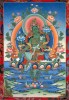
01_tara.jpgThe 21 Taras (01)5988 viewsThe 21 Taras [Tibetan style] (Tibetan, Sgrol-ma)
It was not until the adoption of the Yogachara system, taught by Asanga in the fourth century AD, that the feminine principle began to be venerated in Mahayana Buddhism. Around the sixth century, the goddess Tara was considered as a Sakti of Avalokitesvara (sometimes as his wife).
|
|
01_the_four_noble_truths.mp3Ajahn Maha Boowa Discourses (01)6203 viewsAjahn Maha Boowa
01. The Four Noble Truths
This audio selection of the discourses of Ajahn Maha Boowa, were translated into English and recorded by Ajahn Suchaat at Wat Pa Bann Taad, Thailand.
These Teachings are free gifts of Dhamma and may not be offered for sale.
|
|

01__Eight_Great_Places_Part_1.pdfThe Eight Great Places of Buddhist Pilgrimage 012719 views1. PDF: As more and more Buddhists begin to realize the importance of performing a pilgrimage following the Buddha’s exhortation, the need for a simple guidebook becomes evident. The basic four pilgrimage sites (Lumbini, Bodhgaya, Sarnath and Kushinagar) were increased in terms of the great events of the Buddha’s life to eight by adding four more places considered to be the scenes of four principal miracles that he performed, namely: (i) The Twin Miracle in Sravasti, (ii) Descent from Heaven in Sankasia (iii) Taming of the drunken elephant, Nalagiri in Rajgir and (iv) Offering of honey by a monkey in Vaishali.
|
|
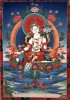
02_tara.jpgThe 21 Taras (02)5080 viewsThe 21 Taras [Tibetan style] (Tibetan, Sgrol-ma)
It was not until the adoption of the Yogachara system, taught by Asanga in the fourth century AD, that the feminine principle began to be venerated in Mahayana Buddhism. Around the sixth century, the goddess Tara was considered as a Sakti of Avalokitesvara (sometimes as his wife).
|
|
02__Eight_Great_Places_Part_2.pdfThe Eight Great Places of Buddhist Pilgrimage 021763 views2. PDF: As more and more Buddhists begin to realize the importance of performing a pilgrimage following the Buddha’s exhortation, the need for a simple guidebook becomes evident. The basic four pilgrimage sites (Lumbini, Bodhgaya, Sarnath and Kushinagar) were increased in terms of the great events of the Buddha’s life to eight by adding four more places considered to be the scenes of four principal miracles that he performed, namely: (i) The Twin Miracle in Sravasti, (ii) Descent from Heaven in Sankasia (iii) Taming of the drunken elephant, Nalagiri in Rajgir and (iv) Offering of honey by a monkey in Vaishali.
|
|
03Basic_Instructions.pdfBasic Instructions for Vipassana Meditation 5140 viewsFrom the beginning and throughout the practice sessions the strategies and fundamentals of Vipassana meditation will be given so that you become well established in the essentials of the techniques involved. Then it is important that the meditator understands the practice in its context. So a frame of reference is necessary, in the form of a framework to the practice as given by the Buddha in his teaching in the Satipatthana Sutta or the discourse on The Four Foundations of Mindfulness.
|
|
03_Framework-for-practice.mp3(3) Framework for the Practice3349 viewsThe Framework for the Practice is based on the Four Establishments of Mindfulness (Satipatthana Sutta): Body, Feelings, Mind States, and Mind Objects.
|
|

03_tara.jpgThe 21 Taras (03)4143 viewsThe 21 Taras [Tibetan style] (Tibetan, Sgrol-ma)
It was not until the adoption of the Yogachara system, taught by Asanga in the fourth century AD, that the feminine principle began to be venerated in Mahayana Buddhism. Around the sixth century, the goddess Tara was considered as a Sakti of Avalokitesvara (sometimes as his wife).
|
|
03_the_4_foundations_of_mindfulness.mp3Ajahn Maha Boowa Discourses (03)2556 viewsThe Four Foundations of Mindfulness
Ajahn Maha Boowa Discourses (03)
These Teachings are free gifts of Dhamma and may not be offered for sale.
|
|
|
|























 Social Bookmarks


