 Image search results - "our" Image search results - "our" |

01scan.mp3Body Scan 016128 viewsBody Scan gives instructions on bringing awareness to bodily sensations. For the most part this exercise is relaxing. Occasionally practitioners initially feel uncomfortable with this exercise. If it becomes overwhelmingly distressing, merely distract or direct attention to something outside your body until you are more comfortable with the exercise at another time.
|
|

01_how_can_we_read.pdfReading the Suttas: How Can We Read?5628 viewsIntroduction. What is a sutta?
How would we read the Nikayas if we were academics?
How would we read the Nikayas if we were practitioners?
A study of the Kalama Sutta. This sutta is one of the most quoted in Western Buddhism, and the most quoted part of it is the section beginning:
“Kà là mas, for you to doubt, to be uncertain; uncertainty has arisen in a doubtful matter. Do not rely upon what has been acquired by repeated tradition; nor upon lineage; nor upon rumour; nor upon what is handed down in the teachings; nor upon logic; nor upon inference; nor upon a consideration of reasons; nor upon a delight in speculation; nor upon appearances; nor upon respect for your teacher. Kà là mas, when you know for yourselves: These things are unskilful; these things are blameable; these things are censured by the wise; undertaken and observed, these things lead to harm and suffering,’ then abandon themâ€.
|
|
01_Inspiration.mp31. Golden Chain Of Love (Songs)2479 viewsThe Buddha is the greatest role model in the history of mankind. As the Exalted One, His boundless love is in comparable to any other. He is the All-knowing One with the ability to communicate even the most complex concept in the universe into simple and easily understood phrases. Endowed with knowledge and virtue, the Buddha reminds us to against perpetrating any unwholesome deeds and encourages us to perform wholesome deeds. With firm morals, the mind can then be set free from all forms of distractions.
|
|
01_Kamma_Aggacitta.mp31. Four Things One Should Not Conjecture About1517 viewsTo what extent do we believe in kamma? The fine line between fatalism and belief in kamma. An edited Dhamma discourse given by Ven. Ayasama Aggacitta.
|
|
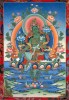
01_tara.jpgThe 21 Taras (01)5988 viewsThe 21 Taras [Tibetan style] (Tibetan, Sgrol-ma)
It was not until the adoption of the Yogachara system, taught by Asanga in the fourth century AD, that the feminine principle began to be venerated in Mahayana Buddhism. Around the sixth century, the goddess Tara was considered as a Sakti of Avalokitesvara (sometimes as his wife).
|
|
01_the_four_noble_truths.mp3Ajahn Maha Boowa Discourses (01)6203 viewsAjahn Maha Boowa
01. The Four Noble Truths
This audio selection of the discourses of Ajahn Maha Boowa, were translated into English and recorded by Ajahn Suchaat at Wat Pa Bann Taad, Thailand.
These Teachings are free gifts of Dhamma and may not be offered for sale.
|
|
01__Eight_Great_Places_Part_1.pdfThe Eight Great Places of Buddhist Pilgrimage 012719 views1. PDF: As more and more Buddhists begin to realize the importance of performing a pilgrimage following the Buddha’s exhortation, the need for a simple guidebook becomes evident. The basic four pilgrimage sites (Lumbini, Bodhgaya, Sarnath and Kushinagar) were increased in terms of the great events of the Buddha’s life to eight by adding four more places considered to be the scenes of four principal miracles that he performed, namely: (i) The Twin Miracle in Sravasti, (ii) Descent from Heaven in Sankasia (iii) Taming of the drunken elephant, Nalagiri in Rajgir and (iv) Offering of honey by a monkey in Vaishali.
|
|
02.mp3Siddhartha2598 viewsSiddhartha is an allegorical novel by Hermann Hesse which deals with the spiritual journey of an Indian man called Siddhartha during the time of the Buddha.
Siddhartha is an allegorical novel by Hermann Hesse which deals with the spiritual journey of an Indian man called Siddhartha during the time of the Buddha.
"Siddhartha" means "he who has attained his goals" or "every wish fulfilled".[1] The Buddha's name, before his renunciation, was Prince Siddhartha Gautama, later the Buddha. The main character of Siddhartha in the book is not the same person as the Buddha, who in the book goes by the name "Gotama".
|
|
02_Kamma_Aggacitta.mp32. To What Extent Do We Surrender to Kamma?1528 viewsTo what extent do we believe in kamma? The fine line between fatalism and belief in kamma. An edited Dhamma discourse given by Ven. Ayasama Aggacitta.
|
|
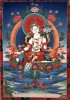
02_tara.jpgThe 21 Taras (02)5080 viewsThe 21 Taras [Tibetan style] (Tibetan, Sgrol-ma)
It was not until the adoption of the Yogachara system, taught by Asanga in the fourth century AD, that the feminine principle began to be venerated in Mahayana Buddhism. Around the sixth century, the goddess Tara was considered as a Sakti of Avalokitesvara (sometimes as his wife).
|
|
| 282 files on 29 page(s) |
1 |
 |
|
|
|
|
|
|




















 Social Bookmarks


