 Most viewed Most viewed |

now_know.pdfNow is the Knowing5113 viewsThis small book represents the wish of some of those fortunate enough to have received Dhamma teachings from Venerable Ajahn Sumedho to share them with others. The first section describes what taking the Three Refuges in the Buddha, Dhamma and Sangha means; and the second section is composed of passages from three or four different talks on the subject of Mindfulness of Breathing. Lastly, the book discusses happiness, unhappiness and Nibanna.
|
|
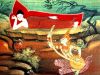
buddha_life_10.jpgThe Harp of Three Strings5101 viewsThe Harp of Three Strings
|
|

pictograph04.jpgPictograph045050 viewsTibetan Buddhist Art Work: Pictograph04
|
|

buddha_life_04.gifThe Prince's marriage5026 viewsThe Prince's marriage
|
|
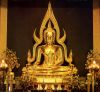
thai-buddha_05.jpg05 Thai Buddha Image4995 views05 Thai Buddha Image
|
|
Arahattamagga.pdfArahattamagga, Arahattaphala: The Path to Arahantship4990 viewsAt present, all that is left of Buddhism are the words of the Buddha. Only his teachings ñ the scriptures ñ remain. Please be aware of this. Due to the corruption caused by the defiling nature of the kilesas, true spiritual principles are no longer practiced in present-day Buddhism. As Buddhists, we constantly allow our minds to be agitated and confused, engulfed in mental defilements that assail us from every direction. They so overpower our minds that we never rise above these contaminating influences, no matter how hard we try. The vast majority of people are not even interested enough to try: They simply close their eyes and allow the onslaught to overwhelm them. They don't even attempt to put up the least amount of resistance. Since they lack the mindfulness needed to pay attention to the consequences of their thoughts, all their thinking and all they do and say are instances of the kilesas giving them a beating. They surrendered to the power of these ruinous forces such a long time ago that they now lack any motivation to restrain their wayward thoughts...
|
|
geth0401.pdfCan Killing a Living Being Ever Be an Act of Compassion?4974 viewsThe analysis of the act of killing in the Abhidhamma & Pali Commentaries.
Abstract: In the Theravadin exegetical tradition, the notion that intentionally killing a living being is wrong involves a claim that when certain mental states (such as compassion) are present in the mind, it is simply impossible that one could act in certain ways (such as to intentionally kill). Contrary to what Keown has claimed, the only criterion for judging whether an act is “moral†(kusala) or “immoral†(akusala) in Indian systematic Buddhist thought is the quality of the intention that motivates it. The idea that killing a living being might be a solution to the problem of suffering runs counter to the Buddhist emphasis on dukkha as a reality that must be understood. The cultivation of friendliness in the face of suffering is seen as something that can bring beneficial effects for self and others in a situation where it might seem that compassion should lead one to kill.
|
|

pictograph05.jpgPictograph054971 viewsTibetan Buddhist Art Work: Pictograph05
|
|
meritsutra.pdfSutra on the Merits of the Master of Healing4969 viewsSutra on the Merits of the Fundamental Vows of the Master of Healing, The Lapis Lazuli Radiance Tathagata; Sutra of the Sacred Formula of the Binding Vows of the Twelve Deva Generals to Enrich All Sentient Beings; Sutra of Tearing Away All Karma Veils. From the Chinese version of the Tripitaka Master Hsuan-tsang (T'ang, 650 C.E.) T. XIV, 450.
|
|
nagarjuna.pdfThe Wisdom of Nagarjuna4964 viewsNagarjuna holds an almost unequaled place among the ranks of those Buddhist saints who expounded the teaching of the Buddha Sakyamuni for the benefit of the world. Nagarjuna revolutionized the interpretation of the doctrine of the Enlightened One which was current at his time and lent it a vitality and dynamism which has continued to sustain it even to our day among the votaries of the Mahayana. The revolution which Nagarjuna accomplished within the fold of Buddhism was not a radical departure from the original doctrine of the Buddha Sakyamuni. On the contrary, the adherents of the Madhyamaka school are undoubtedly justified in asserting that their interpretation represents the true import of the doctrine of the Buddha and the essence of Buddhism.
|
|
| 1212 files on 122 page(s) |
 |
|
|
17 | |
|
|
|






















 Social Bookmarks


