 Most viewed Most viewed |

06_Track_6.mp3INFINITE LOVE AND WISDOM3645 viewsWe clothe ourselves, safely round,
With Infinity love and wisdom,
With love, with love,
With infinite love and wisdom.
|
|

01_Wonhyo_web.pdfVolume 1. Wonhyo: Selected Works3639 viewsA Collection of Korean Buddhism in English. It's translated and compiled by great Scholars including Robert Buswell.
|
|
BT02B.MP3Lecture 2. (b) The Four Noble Truths3632 viewsThe lectures explain the Dhamma from the perspective of Theravada Buddhism, the oldest continuous Buddhist school, whose scriptures, the Pali canon, give the most accurate picture of what the historical Buddha himself actually taught. The lectures are intended to be basic enough to be of value to beginners without previous study of the Dhamma, and deep and through enough to be of interest to long-term students seeking to extend and clarify their understanding.
|
|
Way-it-is-by-ajahn-sumedho.pdfThe Way It Is 3631 viewsThis book contains a collection of teachings of Ajahn Sumedho given to people who are familiar with the conventions of Theravada Buddhism and have some experience of meditation. Most of the chapters are edited from talks given during retreats for lay people for Ajahn Sumedho's monastic (ordained) disciples, so they require some careful attention and are best read in sequence. In many of these talks Ajahn Sumedho expounds on the uniquely Buddhist expression of 'not-self' (anatta). He maintains this to be the Buddha's way of pointing to the experience of Ultimate Reality that is the goal of many religions. During the monastic retreats Ajahn Sumedho frequently teaches the Dependent Origination paticca-samuppada based on the approach of anatta. The Dependent Origination traces the process whereby suffering (dukkha) is compounded out of ignorance (avijja) and conversely suffering is eliminated (or rather not created) with the cessation of ignorance. Just as anatta -- not-self -- is the expression of Ultimate Truth.
|
|
UpSideDown.pdfAn Upside Down World3629 viewsFind out how the sad upside down world of four unhappy wanderers go the right side up again in this wonderful illustrated story book. Suitable for younger children, it includes some fun activities to do as you read along. This book has both colour and black & white Illustrations. [30 pages]
|
|
Karaniya_Metta_Sutta3.pdfKaraniya Metta Sutta3625 viewsThis is a popular discourse, in the form of a poem, and one of the best known and most cited and recited in Theravada Buddhist countries. It is found in the Pali Canon's Khuddakapatha and Sutta Nipata with the title Metta Sutta (The Discourse on Friendliness). However, in order to
distinguish it from other `Metta-suttas' in the Pali Canon, this particular Metta Sutta is traditionally known as Karaniya Metta Sutta because its first verse commences with the Pali word Karaniya (one should act thus).
|
|
Shobogenzo.pdfThe Shobogenzo — Zen Master Eihei Dogen3607 viewsA new translation of a Zen classic... The Shobogenzo is the recognized spiritual masterpiece by the thirteenth century Japanese Soto Zen Master Eihei Dogen. It is comprised of discourses that he gave to his disciples, in person or in writing, at various times between 1231 and his death twenty-two years later at age fifty-three. These discourses cover a wide range of topics pertinent to those in monastic life though often also relevant to those training in lay life. He discusses matters of daily behavior and religious ceremonial as well as issues involving the Master-disciple relationship. He also explores the deeper meaning that informs the so-called Zen koan stories, which often puzzle readers by their seeming illogicality and contrary nature.
|
|
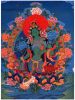
green_tara.jpgGreen Tara Thangka3589 viewsGreen Tara Thangka
|
|
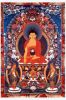
shakyamuni_buddha01.jpgShakyamuni Buddha 013585 viewsShakyamuni Buddha 01
|
|
BT03A.MP3Lecture 3. (a) The True Nature of Existence3578 viewsThe lectures explain the Dhamma from the perspective of Theravada Buddhism, the oldest continuous Buddhist school, whose scriptures, the Pali canon, give the most accurate picture of what the historical Buddha himself actually taught. The lectures are intended to be basic enough to be of value to beginners without previous study of the Dhamma, and deep and through enough to be of interest to long-term students seeking to extend and clarify their understanding.
|
|
| 1212 files on 122 page(s) |
 |
|
|
30 | |
|
|
|




















 Social Bookmarks


