 Most viewed |

02_the_oral_tradition.pdfThe Oral Tradition3399 views
Lists, lists of lists, and lists within lists. Creativity, meditation and the list. Examining some suttas which illustrates the performance and networking aspect of the Suttas: Samanas and brahmanas and the Mahahatthipadopama Sutta: Large Discourse on the Elephant's Footprint (M28)
|
|

05_Working-with-thinking-pain.mp3(5) Working with Thinking and Pain3399 viewsWorking with Thinking and Pain in meditation, explains how to relate to pain and the ability to handle the "Thinking Mind" skilfully.
|
|

buddha_life_18.jpgReturning to Kapilavastu3395 viewsReturning to Kapilavastu
|
|

Bhutan0015.jpgBhutan - Buddhist Himalayan Kingdom (06) 3387 viewsIn 2005 the Australian monk Ven S Dhammika was invited to the remote Himalayan kingdom of Bhutan and spent ten days visiting the countries monasteries, shrines and temples. We present some of the pictures he took while in this rarely visited land and hope you enjoy them.
|
|
virtue.pdfVirtue and Reality3381 viewsThe teachings of the Buddha can be divided into two categories - extensive method and profound wisdom. In this series of talks, Lama Zopa Rinpoche, spiritual director of the Foundation for the Preservation of the Mahayana Tradition (FPMT), offers a practical explanation of these two paths. As presented here, method is the loving, compassionate Bodhicitta and wisdom is the realisation of ultimate reality, the right view of emptiness. Through practicing method, we attain the holy body of a Buddha; through developing wisdom we attain the enlightened mind. Recognizing the workaday world reality in which most of his students live, Rinpoche shows us how to think and act so that every moment of our lives will be of maximum benefit to both others and ourselves.
|
|

05guanyin1.jpgPortrait of Quan Yin3378 viewsPortrait of Quan Yin (Godess of Mercy)
|
|

1000_arms_avalokiteshvara02.jpg1000 Arms Avalokiteshvara3373 views1000 Arms Avalokiteshvara
|
|
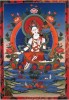
06_tara.jpgThe 21 Taras (06)3373 viewsThe 21 Taras [Tibetan style] (Tibetan, Sgrol-ma)
It was not until the adoption of the Yogachara system, taught by Asanga in the fourth century AD, that the feminine principle began to be venerated in Mahayana Buddhism. Around the sixth century, the goddess Tara was considered as a Sakti of Avalokitesvara (sometimes as his wife).
|
|

merit_field.jpgMerit Field Thangka3372 viewsMerit Field Thangka
|
|
dhamma-nibbana.pdfPractising Dhamma with a View to Nibbana3371 viewsRadhika Abeysekera began teaching and writing books on the Dhamma to help reintroduce Buddhism to immigrants in non-Buddhist countries. The books are designed in such a manner that a parent or educator can use them to teach Buddhism to a child. Mrs. Abeysekera feels strongly that parents should first study and practise the Dhamma to the best of their ability to obtain maximum benefits, because what you do not possess you cannot give to your child. The books were also designed to foster understanding of the Dhamma among non-Buddhists, so that there can be peace and harmony through understanding and respect for the philosophies and faiths of others.
|
|
| 1212 files on 122 page(s) |
 |
|
|
34 | |
|
|
|























 Social Bookmarks


