 Most viewed |
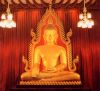
thai-buddha_08.jpg08 Thai Buddha Image3026 views08 Thai Buddha Image
|
|

BT03B.MP3Lecture 3. (a) The True Nature of Existence3024 viewsThe lectures explain the Dhamma from the perspective of Theravada Buddhism, the oldest continuous Buddhist school, whose scriptures, the Pali canon, give the most accurate picture of what the historical Buddha himself actually taught. The lectures are intended to be basic enough to be of value to beginners without previous study of the Dhamma, and deep and through enough to be of interest to long-term students seeking to extend and clarify their understanding.
|
|
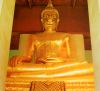
thai-buddha_07.jpg07 Thai Buddha Image3019 views07 Thai Buddha Image
|
|
track01_introduction-to-meditation.mp3(01) Vipassana Meditation Retreat3015 viewsTrack01 Introduction to Meditation - 10 Vipassana Retreat Talks, by Sayadaw U Janaka (6/12/2003)
The opening evening talk during an intensive Vipassana(Insight) meditation retreat in the Mahasi Sayadaw tradition of Burma, by the abbot and meditation master of Chanmyay Meditation Centre, Yangon, Myanmar.
|
|
File02_(AM)_Introducing_Mahasi_method.mp3Introducing Mahasi Method3004 viewsPatrick Kearney's Vipassana Retreat Talk at Bodhi Tree Monastery (2009)
Today we introduce the method of meditation we are practising during this retreat. Yesterday morning we just brought a sense of open curiosity to the examination of mind/body experience. This morning we are applying system to this investigation, stimulating what the Buddha calls yoniso manasikara, “appropriate attention.†We do this through the meditation method created by Mahasi Sayadaw of Burma (1904-1982), which is structured by his division of experience into primary and secondary object, along with the fundamental activities of noting, naming and noticing.
|
|

buddhist_solutions_for_the_twenty-first_century_28eng29.pdfBuddhist Solutions for the Twenty-first Century3003 views
|
|
good_evil_beyond.pdfGood, Evil and Beyond2996 viewsFor the modern Westerner, the teaching of kamma offers a path of practice based not on fear of a higher authority, nor dogma, but rather founded on a clear understanding of the natural law of cause and effect as it relates to human behaviour. It is a teaching to be not so much believed as understood and seen in operation.
|
|
First_Discourse-Comparison_of_Versions.pdfThe Buddha's First Discourse: a Comparision of Versions2990 viewsThis is a study of the Dhammacakka-Pavattana-Sutta, officially considered the first discourse of the Buddha. The tradition acknowledges that he spoke about his teaching before the occasion of the delivery of this discourse. This study was undertaken during my Buddhist studies, which was one major of my Batchelor of Arts at the University of Queensland, completed in 2004. The study compares 17 possible versions of this discourse from four languages: Pali, Chinese, Tibetan and Sanskrit. Some interesting differences are discovered and an attempt is made to explain them. An expected core of all the discourses stands out, which shows why all major schools of Buddhism accept the Four Noble Truths as the essential teaching of the Buddha.
|
|
taste-freedom.pdfA Taste of Freedom2989 viewsVenerable Ajahn Chah always gave his talks in simple, everyday language. His objective was to clarify the Dhamma, not to confuse his listeners with an overload of information. Consequently the talks presented here have been rendered into correspondingly simple English. The aim has been to present Ajahn Chah's teaching in both the spirit and the letter. In 1976 Venerable Ajahn Chah was invited to England together with Ajahn Sumedho, the outcome of which was eventually the establishment of the first branch monastery of Wat Pa Pong outside of Thailand. Since then, further branch monasteries have been established in England, Switzerland, Australia, New Zealand and Italy.
|
|
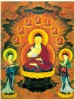
Amithaba004.jpgAmithabha Buddha042989 viewsAMITABHA: Buddha of Boundless Light of the Western Paradise
|
|
| 1212 files on 122 page(s) |
 |
|
|
43 | |
|
|
|





















 Social Bookmarks


