 Most viewed Most viewed |

craft.pdfThe Craft of the Heart, by Ajaan Lee Dhammadharo2770 viewsThis book, Ajaan Lee’s first, is like a catalog. In it, he gives the full range of his teachings on the practice of the Buddha’s craft, from the observance of the five precepts to the attainment of total liberation. Thus the different parts are written for different people at different stages in the practice, and the reader is advised to read, not judgmentally, but judiciously - taking whatever is useful for his or her own practice, and leaving the rest for others.
|
|
gqga_spanish.pdfGood Question, Good Answer (Spanish)2769 viewsGood Question, Good Answer (Spanish version)
|
|
8_Precepts_Diacritials.pdfEight Precepts (Diacritials)2769 viewsAjivatthamaka Sila (Eight Precepts with Right Livelihood as the Eighth) In Theravada Buddhism there are two versions of the Eight Precepts: Atthangika Uposatha Sila (Eight Uposatha Precepts) and Ajivatthamaka Sila (Eight Precepts with Right Livelihood as the Eighth).
|
|
02_Chinul_web.pdfVolume 2. Chinul Selected Works2763 viewsA Collection of Korean Buddhism in English. It's translated and compiled by great Scholars including Robert Buswell.
|
|
Nagarjuna-upaya.pdfNÄgÄrjuna and the Philosophy of UpÄya 2761 viewsThe purpose of this article is to offer a different account of NÄgÄrjuna than is found in contemporary Western scholarship. It will not ask what it means for causality, truth, the self, or consciousness to be "empty" in a very general sense, but rather how NÄgÄrjuna’s philosophy relates to the soteriological practices of Buddhism and what it means for those practices to be "empty" of inherent nature. Rather than describing NÄgÄrjuna as a metaphysician this study will situate him squarely within the early MahÄyÄna tradition and the philosophical problem of practice that is expressed through the doctrine of “skill-in-means†(upÄya-kauÅ›alya). It should become evident in what follows that the doctrine of upÄya has little in common with Western metaphysics. It is unconcerned with problems regarding causality, personal identity, consciousness, logic, language, or any other issues that are unrelated to specific problems surrounding the nature and efficacy of Buddhist practice. Given that every major tradition in Buddhism stresses the indispensable nature of practice, it is highly unlikely that Nagarjuna’s philosophy is concerned with metaphysical issues or that his doctrine of “emptiness†can be separated from the soteriological practices of Buddhism.
|
|
patimokkha-german.pdfBhikkhu Pâtimokkha in German2755 viewsThe author is Ven. Nyanadassana is a Buddhist monk from Greece who has lived in Sri Lanka for the last 20 years. He is fluent in several languages (including Sinhala) and is the author of the book "Bhikkhu Pâtimokkha" in German(Pâtimokkha - Das Hauptgesetz der Bettelmönche).
|
|
bps-essay_39.pdfLifestyles and Spiritual Progress2749 viewsNew comers to Buddhism often ask whether a person’s lifestyle has any special bearing on their ability to progress along the Buddha’s path, and in particular whether the Buddha had a compelling reason for establishing a monastic order governed by guidelines quite different from those that hold sway over the lay Buddhist community. If we suspend concern for questions of status and superiority and simply consider the two modes of life in their ideal expression, the conclusion would have to follow that the monastic life, lived in the way envisioned by the Buddha, is the one that conduces more effectively to the final goal.
|
|

Chief_Part3.movChief - Documentary on the Ven. Dr. K. Sri Dhammananda (Part 3)2748 viewsFor more than half a century, K Sri Dhammananda has been a leading light in disseminating Buddhism in Malaysia. Although there are different schools of Buddhism practiced in this country, such is his deep impact on the community that he is affectionately known by all as Chief Venerable, or just "Chief". This short film offers a glimpse of Chief's remarkable life and work.
|
|
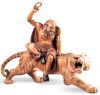
lohan18.jpgLohan: PINDOLA2741 viewsLegend has it that the first portraits of the 18 Lohans were painted by a Buddhist
monk Guan Xiu, in 891 A.D. Guan Xiu lived in Chengdu, the capital of a small
|
|
gratitude.pdfGratitude in the Buddha’s Teachings2736 viewsThis text, with an introduction on the subject of gratitude in the Buddha's Teachings has extacts from Pali Suttas on Gratitude and Suttas on Ingratitude. In the Mangala Sutta, the Buddha declares that the quality of gratitude to be one of the highest blessings, thus showing how it plays a key role in His ethical and spiritual teachings.
|
|
| 1212 files on 122 page(s) |
 |
|
|
48 | |
|
|
|






















 Social Bookmarks


