 Most viewed Most viewed |

11white_lotus.jpgWhite Lotus 112709 viewsWhite Lotus 11
|
|

noinnercore.pdfNo Inner Core2708 viewsAnatta is a Pali word consisting of a negative prefix, "an" meaning not, plus atta, soul, and is most literally translated as no-soul. The word atta, however, has a wide range of meanings, and some of those meanings cross over into the fields of psychology, philosophy, and everyday terminology, as, for example, when atta can mean self, being, ego, and personality. Therefore, we will examine and elucidate the wide range of meanings which atta can signify in order to determine exactly what the Buddha denied when He proclaimed that He teaches anatt?, that is, when He denied the existence of atta. We will examine both Buddhist and non-Buddhist definitions of the term soul, and we will also examine modern definitions of terms such as ego and self.
|
|
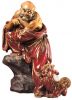
lohan08.jpgLohan: VAJRAPUTRA2699 viewsLegend has it that the first portraits of the 18 Lohans were painted by a Buddhist
monk Guan Xiu, in 891 A.D. Guan Xiu lived in Chengdu, the capital of a small
kingdom, the Former Shu, formed at the decline of the Tang Dynasty in what is
today's Sichuan Province. He was adept at the scholarly pursuits of painting,
calligraphy and poetry.
|
|
lightasia.pdfThe Light of Asia (Text Only)2697 viewsIn the sumptuous Buddhist literature of the world, The Light of Asia, by Sir Edwin Arnold, is without any doubt, a unique work. It is primarily because, this is the only original poem written in English on the Buddha, throughout the long history of Buddhism. This distinction is quite necessary to be established, because there are translations of original Pali works into English and other languages. Some of these are outstanding instances of spiritual poetry. Sir Edwin Arnold, the Author of this epic poem, was initially persuaded to compose this sacred work, as a result of his deep and abiding desire to aid in the better and mutual understanding between East and West.
|
|
bmc2.pdfThe Buddhist Monastic Code II2692 viewsThe Khandhaka Rules Translated and Explained
This volume is an attempt to give an organized, detailed account of the training rules found in the Khandhakas that govern the life of bhikkhus, together with the traditions that have grown up around them. It is a companion to The Buddhist Monastic Code, Volume One (BMC1), which offers a similar treatment of the Patimokkha training rules.
|
|
mission-accomplished.pdfThe Mission Accomplished2686 viewsA historical analysis of the Mahaparinibbana Sutta of the Digha Nikaya of the Pali Canon. The Mission Accomplished is undoubtedly an eye opening contribution to Buddhist analytical Pali studies. In this analytical and critical work Ven. Dr. Pategama Gnanarama enlightens us in many areas of subjects hitherto unexplored by scholars. His views on the beginnings of the Bhikkhuni Order are interesting and refreshing. They might even be provocative to traditional readers, yet be challenging to the feminists to adopt a most positive attitude to the problem. Prof. Chandima Wijebandara, University of Sri Jayawardhanapura, Sri Lanka.
|
|
Samyutta-Nikaya-An-Anthology-I.pdfSaṃyutta NikÄya An Anthology - Part I2678 viewsThe Saṃyutta NikÄya is one of the five great divisions of the Sutta Piá¹aka of the PÄli canon, the Tipiá¹aka or “Three Baskets†of doctrine, constituting the Buddha-word for TheravÄda
Buddhism. The meaning of “Saṃyutta NikÄya†is “The Collection of Grouped Discourses†and it is so called because its material is arranged into groups (saṃyuttas) according to subject, of which there are fifty-six. These again are placed into five vaggas, sections or chapters, corresponding to the five divisions of this anthology
|
|
MHRGKKBFMBGe.pdfMYO-HO-REN-GE-KYO2672 viewsWonderful-Dharma-Lotus-Flower-Sutra:
Kan-ze-on Bo-satsu Fu-mon-bon-ge.
Avalokiteshvara Bodhisattva - All-Sidedness
(in Overcoming Anxiety-Hindrances).
|
|
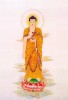
Amithaba010.jpgAmithabha Buddha102670 viewsAMITABHA: Buddha of Boundless Light of the Western Paradise
|
|

01_Inspiration.mp31. Golden Chain Of Love (Songs)2670 viewsThe Buddha is the greatest role model in the history of mankind. As the Exalted One, His boundless love is in comparable to any other. He is the All-knowing One with the ability to communicate even the most complex concept in the universe into simple and easily understood phrases. Endowed with knowledge and virtue, the Buddha reminds us to against perpetrating any unwholesome deeds and encourages us to perform wholesome deeds. With firm morals, the mind can then be set free from all forms of distractions.
|
|
| 1212 files on 122 page(s) |
 |
|
|
50 | |
|
|
|




















 Social Bookmarks


